Client
Électricité de Djibouti
Year
2022 - 2024
Location
Djibouti

Context

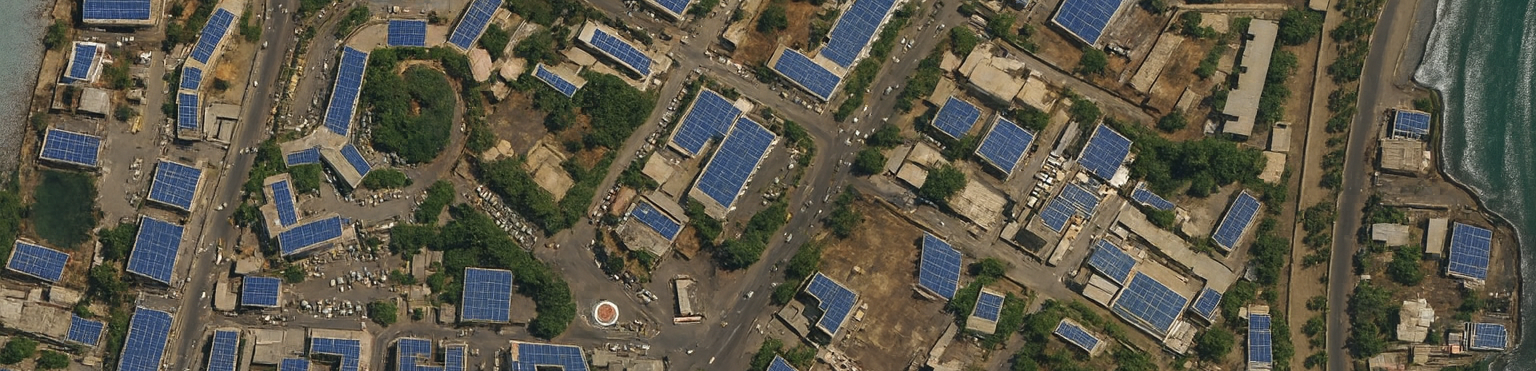
In 2021, Électricité de Djibouti (EDD) launched a strategic study to modernize its distribution network and develop self-production of electricity from solar photovoltaics. As part of the Sustainable Electrification Project funded by the International Development Association (IDA), Mission 2 specifically targeted the residential sector and SMEs/SMIs.

The residential sector accounts for nearly 50% of national consumption. Promoting solar self-generation is therefore a major lever for reducing pressure on the grid, improving energy security, and promoting the transition to local renewable energies.


Objectives

  • Assess the capacity for integrating residential and SME/SMI solar power into the LV grid.
  • Define technical connection criteria in line with international best practices (IEC, IEEE, IRENA).
  • Prevent technical risks related to harmonics, power surges, and islanding.
  • Establish standards that facilitate the rapid and secure development of grid-connected photovoltaics.

Methodology

The study was based on:

  • A detailed analysis of the urban network to identify technical constraints and integration margins.
  • Modeling of solar self-production scenarios for different sizes of installations (households, SMEs, SMIs).
  • Comparison with the network codes of the European Union and the Eastern Africa Power Pool in order to adapt realistic specifications for Djibouti.

Key results

  • Adoption of a categorization by facility size to harmonize connection rules.
  • Definition of voltage and frequency ranges adapted to the Djiboutian grid, ensuring stability even in the event of disturbances.
  • Introduction of requirements for reactive power supply, lightning protection, and automatic reconnection mechanisms, which are essential for system security.
  • Recommendation of a smart metering framework to measure and value the energy injected by self-producers.

Expected impact

Implementing these recommendations will enable Djibouti to:

  • Rapidly increase the penetration of residential and SME/SMI solar energy.
  • Reduce dependence on imported fossil fuels.
  • Improve grid reliability while reducing technical losses.
  • Raise awareness among subscribers of the economic and environmental benefits of self-generation.

Conclusion

This study marks a key step in Djibouti’s energy transition. By establishing clear and appropriate rules for solar photovoltaics, EDD is laying the foundations for a sustainable model in which citizens and businesses become active participants in energy production.

We can help you!

Questions about integrating PV into the grid?

These customers trust us